
Black Friday Safety Tips 2026: Is Black Friday Dangerous in NYC?

Howard Raphaelson
Partner
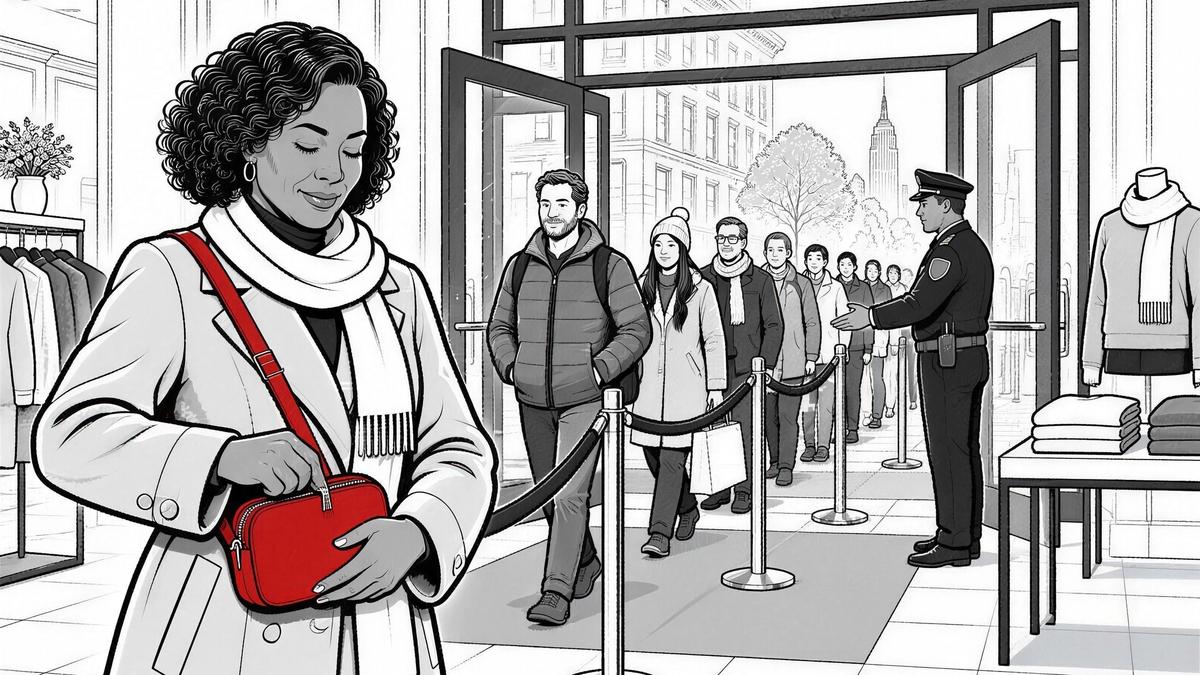
We analyzed 11 years of NYPD data to find out where New York shoppers get hurt on Black Friday.
The numbers flip the usual script. On city streets, crash injuries drop 18% and pedestrian injuries fall 29% compared to a typical November day.
The sharper physical risks build up inside and around retail stores. When retailers invite massive doorbuster crowds and cut corners on safety, everyday hazards pile up fast: wet entryways, cluttered aisles, falling merchandise, and packed parking lots.
Below, see the full NYC data breakdown, practical ways to stay safe this Black Friday, and when a store can be held legally responsible if you get hurt.
Key Takeaways
- Is Black Friday dangerous? For most shoppers, no. In New York City, crime reports inside stores run 37% above an average November day, and most of them are theft.
- New York City streets are calmer. Crash injuries drop 18% on Black Friday, and pedestrian injuries drop 29%.
- The injury risks are crowds, falls and parking lots. Stores must keep their property reasonably safe, and on Black Friday that includes managing the crowd they invited.
- If you're hurt in a store, report it, take photos, get medical care and call our New York premises liability lawyers at (212) 268-3222 for a free consultation.
Is Black Friday Dangerous? In NYC, Crime Reports Inside Stores Jump 37%
Black Friday isn't dangerous for most shoppers, but it is a big day for crime reports inside New York City stores. From 2015 to 2025, the NYPD took an average of 150.8 complaints at department stores, chain stores, clothing stores and other shops on Black Friday.
On an average November day, it took 110.0. That's 37% more.
Black Friday came out ahead in all 11 years. In 2024, its 209 in-store complaints made it the busiest day of the month.
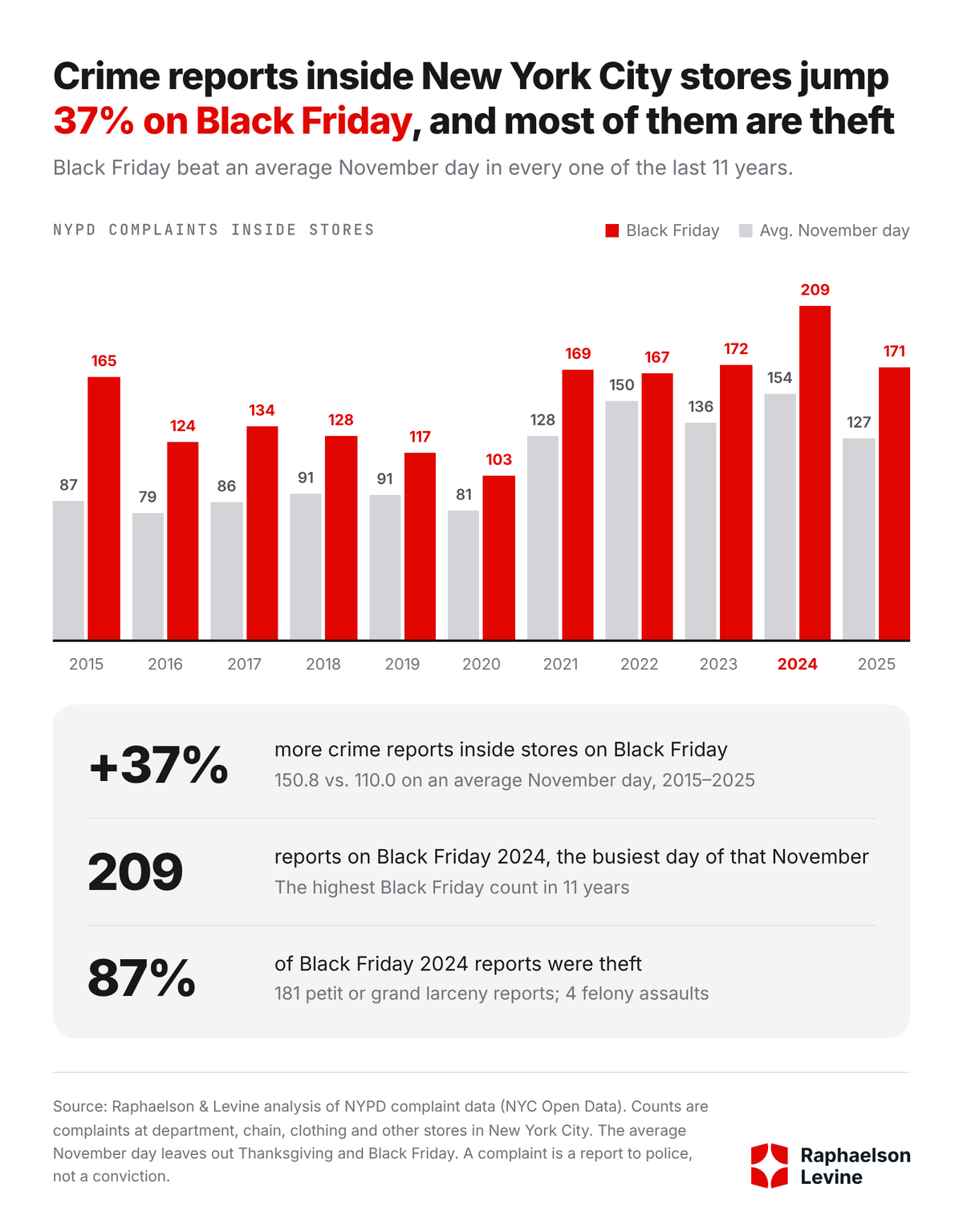
Most of those reports are theft, not attacks. Of the 209 in-store complaints on Black Friday 2024, 181 were petit or grand larceny (~87%). That count includes shoplifting and thefts from shoppers. Felony assaults totaled 4, and there was 1 robbery.
Are NYC Streets More Dangerous on Black Friday? Crash Injuries Drop 18%
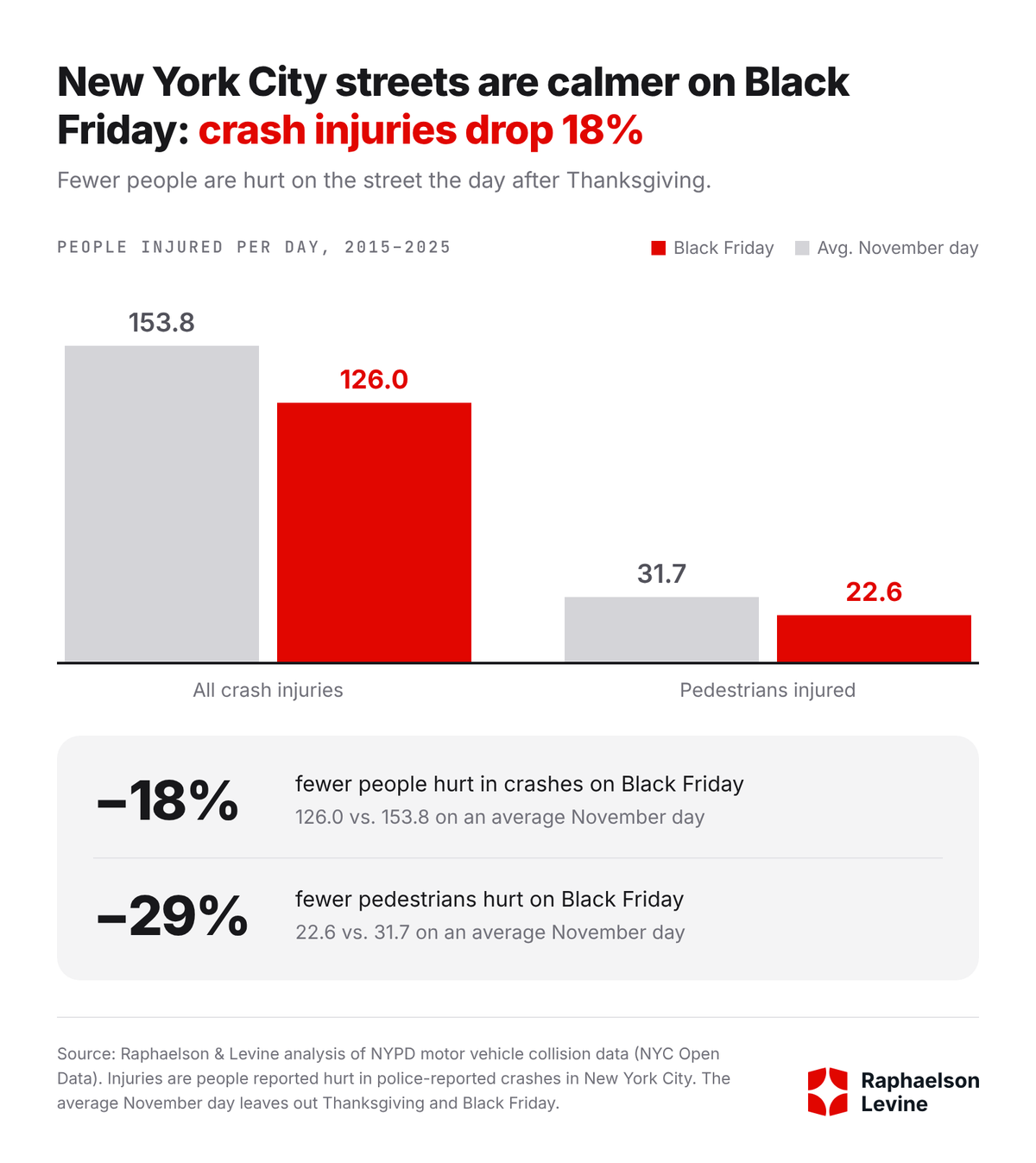
No. New York City streets are calmer on Black Friday than on a typical November day. From 2015 to 2025, police-reported crashes injured an average of 126.0 people on Black Friday, compared with 153.8 on an average November day. That's 18% fewer.
People on foot saw an even bigger drop.
An average of 22.6 pedestrians were hurt on Black Friday, compared with 31.7 on an average November day, 29% fewer.
Lower averages don't help much if a driver hits you while you're carrying bags across a busy avenue. Our pedestrian accident lawyers handle these cases across New York City.
Black Friday Shopping Safety Tips for 2026
A good Black Friday shopping safety plan protects three things: your body in a crowd, your belongings in the store and your money online.
About 182.7 million people plan to shop over Thanksgiving weekend this year, and 69% of them plan to shop on Black Friday, according to the National Retail Federation.
Before you go
- Plan your stops. Check store hours and doorbuster rules online so you aren't rushing when the doors open. Knowing where you're headed keeps you out of the thickest crowds.
- Wear flat shoes with good grip. Entryways get wet from rain, slush and tracked-in water, and a fall in a packed store can be serious.
- Pick a meeting spot. If you're shopping with kids or a group, charge your phones and agree on where to meet. Crowds separate people fast.
- Carry less. Leave valuables at home. Bring one card and a little cash in a front pocket or a zipped crossbody bag.
Inside the store
- Skip the crush at the door. Let the first wave of shoppers go in and follow a few minutes later. No doorbuster deal is worth a crowd surge.
- Watch the floor. Step around spills, loose mats, boxes and cords, and tell an employee about them.
- Ask for help with high shelves. Merchandise stacked overhead can fall when shoppers grab at it.
- Keep your bag closed and in front of you. Never leave a phone or wallet in a shopping cart. Theft is the most common crime reported in New York City stores on Black Friday.
- Leave if the crowd turns pushy. Move toward a wall or an exit, away from the pressure.
In crowds and lines
- Know your exits. When you walk in, notice where the nearest exit is.
- Protect your breathing room. If a crowd starts to surge, move sideways toward the edge instead of pushing against the flow.
- Keep children close. Hold hands, or keep small kids in a stroller or carrier, away from the front of a line.
In parking lots, on the street and on the subway
- Park in a well-lit spot near the entrance, and note where you parked.
- Lock bags in the trunk. Bags left on a seat invite a break-in.
- Drive slowly in lots and garages. Watch for people stepping out between parked cars with their arms full.
- Stay alert on transit. On the subway and buses, keep your bags in front of you and your phone put away near the doors.
Online
- Type store addresses yourself. Don't shop through links in texts or social media ads. Fake delivery texts and copycat stores are common during holiday sales.
- Pay with a credit card. Credit cards give you stronger rights to dispute a charge than debit cards.
- Never pay a stranger by gift card, wire transfer or crypto. Those are the payment methods scammers ask for.
- Check out on your own connection. Use your phone's data or your home Wi-Fi, not public Wi-Fi, when you enter card details.
- Lock down your store accounts. Use a different password for each one and turn on two-step verification, so a stolen password isn't enough to get in.
- Act fast if you're scammed. Call your card company to dispute the charge right away, then report it at ReportFraud.ftc.gov.
Online fraud is costly. People reported losing about $16 billion to fraud in 2025, the highest on record, according to the Federal Trade Commission.
What Injuries Happen on Black Friday?
Most Black Friday injuries come from too many people in too little space: crowd surges, slips and trips, falling merchandise and parking lot crashes. Each one has a common cause, and often a party responsible for preventing it.
Injury | Common cause | Who may be responsible |
|---|---|---|
Crush and trampling injuries | A crowd surge at the doors or around a doorbuster display | The store, and any security company it hired, for crowd control |
Slip and fall injuries | Wet entryways, spills and loose mats | The store or the property owner |
Trip and fall injuries | Boxes, pallets and cords in aisles; broken pavement outside | The store, the property owner or, for many city sidewalks, the owner of the building next to it |
Head and shoulder injuries | Merchandise falling from high shelves or displays | The store |
Escalator and elevator injuries | Overcrowding, sudden stops and poor maintenance | The store, the property owner or the maintenance company |
Parking lot injuries | Drivers backing out or speeding through a lot | The driver, and sometimes the lot owner |
Assault injuries | A fight over merchandise or a robbery | The attacker, and sometimes a property owner that ignored a known danger |
The worst Black Friday crowd disaster in the region happened close to home. On November 28, 2008, about 5 a.m., a crowd broke through the doors of a Walmart in Valley Stream, on Long Island. Jdimytai Damour, a 34-year-old temporary worker, was trampled and died. Federal workplace safety officials later cited Walmart for inadequate crowd management.
The next year, OSHA published crowd management guidance for retailers. It calls for trained security staff, barricades or rope lines that don't start right at the entrance, an emergency plan, and stopping entry once a store reaches its maximum occupancy. It's a clear picture of what careful crowd control looks like.
Who's Responsible If I'm Hurt in a New York Store on Black Friday?
In New York, a store or property owner must keep its premises reasonably safe for the people it expects, and on Black Friday it expects a crowd. New York's highest court set that standard in Basso v. Miller in 1976. It replaced the old rules that gave customers, guests and trespassers different levels of protection with one test: reasonable care under the circumstances.
Black Friday is part of the circumstances. A store that advertises doorbusters and opens its doors to a crowd should plan for that crowd, with enough staff, security, clear aisles and dry floors. When it doesn't and a shopper gets hurt, the store may be responsible.
Each type of case needs different proof. A slip and fall case often comes down to how long a spill sat on the floor, while an escalator accident case may depend on maintenance records. Stores also tend to argue that the shopper should have seen the hazard. New York uses comparative fault, so that argument can reduce what a case is worth, but it doesn't end the case on its own.
What should I do if I'm hurt while shopping?
- Report it before you leave. Tell a manager and ask for a copy of the incident report, or at least the name of the person who took it.
- Take photos. Photograph the spot, the hazard and your injuries, and get the names and phone numbers of witnesses.
- Ask the store to save its video. Security footage gets recorded over, so put the request in writing quickly.
- Get medical care the same day. Some injuries, like head and back injuries, show up hours later.
- Keep your receipt, shoes and clothes as they are. They can show what you were wearing and where you were.
- Talk to a lawyer before the store's insurer. An adjuster may call quickly and ask for a recorded statement. You don't have to give one.
Time limits apply to every injury case. Our New York premises liability lawyers will confirm which deadlines apply. Call (212) 268-3222 for a free consultation. No Fee Unless We Win.
Quick Answers About Black Friday Safety
For most shoppers, no. In New York City, the biggest Black Friday increase is in theft inside stores: crime reports at stores run about 37% above an average November day, and most are larceny. Crowds, falls and parking lots are the main injury risks.
Skip the first rush at the doors, wear shoes with good grip, keep your bag closed and in front of you, park in a well-lit spot, and shop online only on sites you typed in yourself.
Yes, for crashes. From 2015 to 2025, crash injuries were 18% lower on Black Friday than on an average November day, and pedestrian injuries were 29% lower.
Theft. On Black Friday 2024, 181 of the 209 crime reports at New York City stores were petit or grand larceny, about 87%. That includes shoplifting and thefts from shoppers, so keep your bag closed.
Yes, if the store's carelessness caused your injury. New York requires stores to use reasonable care, which includes managing crowds, cleaning up spills and stacking merchandise safely. Our New York premises liability lawyers can review what happened in a free consultation.
Get medical care, report it to the store before you leave, ask the store in writing to save its video, and write down witness names. Talk with a lawyer before you give a statement to the store's insurer.
Hurt While Shopping on Black Friday? We're Here to Help
Injuries on Black Friday aren't common, but they do happen: a fall on a wet floor, a shove at the doors, a car backing out of a crowded parking spot.
When they do, our New York premises liability lawyers can help you understand your options and guide you through the next steps. No Fee Unless We Win.
Call (212) 268-3222 or contact us online for a free consultation, available 24/7 in English, Spanish and Mandarin.
Our data and sources (8)
- We analyzed NYPD complaint data and NYPD motor vehicle collision data published on NYC Open Data for 2015 through 2025. For crime inside stores, we counted complaints whose location was recorded as a department store, chain store, clothing or boutique store, or other store. For each year, we compared Black Friday with the average of the other November days, leaving out Thanksgiving and Black Friday.
- Complaints are reports to police, not convictions, and they include both shoplifting and thefts from shoppers. Crash figures count people reported injured in police-reported crashes in New York City.
- NYPD Complaint Data Historic (NYC Open Data): source of the in-store crime report counts and the first chart.
- Motor Vehicle Collisions: Crashes (NYC Open Data): source of the crash and pedestrian injury averages and the second chart.
- National Retail Federation, November 2026: 2026 Thanksgiving weekend shopping survey.
- Federal Trade Commission, June 2026: fraud losses reported in 2025.
- OSHA, Crowd Management Safety Guidelines for Retailers and the U.S. Department of Labor's November 2009 release.
- Basso v. Miller, 40 N.Y.2d 233 (1976): New York's reasonable care standard for property owners.

Free Consultation.
No Fee Unless We Win.
Overwhelmed with medical expenses, lost wages, pain, & suffering? Don't settle with an insurance company for less than you deserve. We're here for you.
We’re available to you 24/7
You'll have direct access to a paralegal, a dedicated attorney, and a dedicated partner
34 years of experience representing injured New Yorkers
- Get Directions
Manhattan
14 Penn Plaza Suite 1718 New York, NY 10122(212) 268-3222 - Get Directions
Long Island
135 Crossways Park Dr Suite 404 Woodbury, NY 11797(212) 268-3222 - Get Directions
Flushing
136-68 Roosevelt Ave Suite 709 Flushing, NY 11354(917) 828-3820