
Key Takeaways:
- On March 16, 2026, a four-alarm fire at 44-49 College Point Boulevard in Flushing, Queens killed four people (including a 3-year-old boy), injured 15 civilians, and displaced the entire building. Investigators are examining building conditions, a possible space heater origin, and a history of illegal subdivision complaints.
- Families and survivors may have legal claims under New York premises liability and wrongful death law if unsafe building conditions, code violations, or negligent maintenance contributed to the fire or worsened its spread.
- Evidence and deadlines are time-sensitive. The statute of limitations is generally three years for personal injury and two years for wrongful death. A free consultation can help clarify your options: call (212) 268-3222.
What Happened on College Point Boulevard?
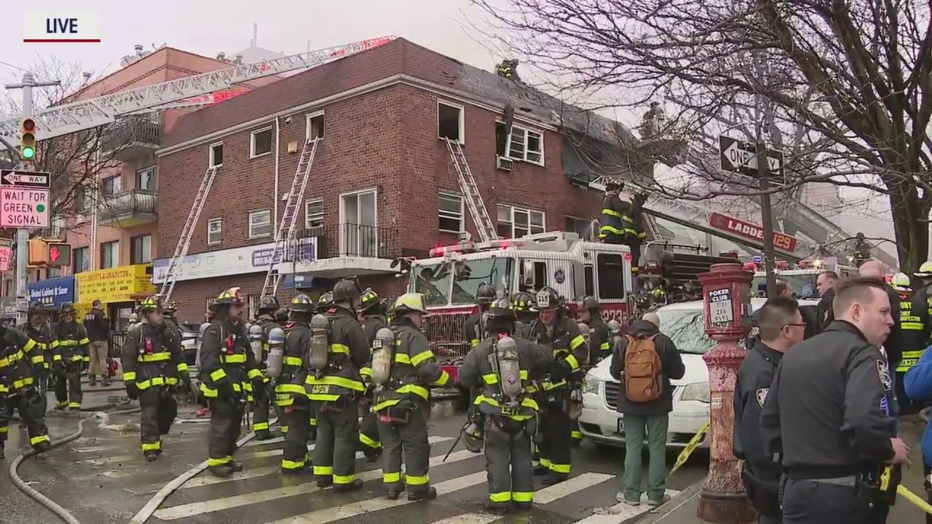
A four-alarm fire tore through a mixed-use building at 44-49 College Point Boulevard in Flushing, Queens on Monday afternoon, March 16, 2026, killing four people (including a 3-year-old boy), injuring 15 civilians, and forcing residents to jump from upper-floor windows to escape.
According to CBS New York, the FDNY received the call just before 12:30 p.m. and had firefighters on scene within four minutes. By the time the blaze was brought under control at 2:44 p.m., four people were dead and at least two of the injured had been transported in critical condition. More than 231 firefighters and EMS personnel responded (ABC7 Eyewitness News).
Three residents jumped from the third floor. Another was rescued from the second floor by FDNY members using a portable ladder. A staircase inside the building collapsed during the response, briefly trapping two firefighters who had to be extricated from the debris (NY Times).
FDNY Commissioner Lillian Bonsignore called it "a difficult and tragic day." Mayor Zohran Mamdani mourned "the loss of four New Yorkers" in a public statement. The Department of Buildings issued a full vacate order for 44-49 College Point Blvd. and a neighboring address at 132-05 Avery Ave., and both gas and electrical service were shut off.

What Are Investigators Examining?
In a fire this deadly, investigators typically examine not only the ignition source, but also whether building conditions, fire safety features, layout, occupancy, and maintenance issues may have worsened the spread.
1: Wind conditions
FDNY Chief of Fire Operations Kevin Woods confirmed that Monday's heavy wind gusts significantly worsened the fire's severity and complicated the response.
2: Possible ignition source
According to early reporting, investigators have identified a possible origin point in Apartment 3N on the third floor, where a space heater may have ignited a mattress (Yahoo News). If confirmed, this raises questions about whether the building's heating system was providing adequate warmth to tenants, and whether residents were relying on supplemental heating as a result.
Under New York City HPD Heat and Hot Water Requirements, landlords are required to maintain indoor heat at a minimum of 68°F when the outside temperature falls below 55°F between 6 a.m. and 10 p.m., and at least 62°F overnight regardless of outside temperature. A failure to meet those requirements can carry legal consequences.
That does not mean inadequate heat caused this fire. It means that if investigators find residents were relying on supplemental heating because required building heat was not provided, that fact could become relevant in both the investigation and any negligence analysis.
3: Illegal subdivisions
The Department of Buildings had received complaints about illegal subdivisions at 44-49 College Point Boulevard as far back as 2010. As of the time of the fire, it is unclear whether those complaints were ever fully resolved.
Illegal subdivisions (where a building owner converts apartments into additional units or creates living spaces without permits) can create serious fire-safety risks, including blocked egress, overcrowding, and missing code-required protections such as self-closing doors and adequate smoke detection, all of which are required under the NYC Fire Code and New York City Housing Maintenance Code. If investigators determine those conditions existed here and contributed to the injuries or deaths, they could become central to any civil case.
This isn’t the first time Queens has faced this issue in 2026. In February, another Queens building fire (in a basement unit) was linked to an illegal subdivision that investigators say contributed directly to the deaths of a mother and her newborn daughter.
4: Other factors
Witnesses reported hearing a loud boom before the fire took hold. FDNY Fire Marshals are actively investigating the fire's official origin and cause.
You can review the complaint and violation history for any New York City building through the NYC Department of Buildings BIS Portal or DOB NOW.
Can Families and Survivors Have Legal Claims After This Fire?
Potentially, yes. If investigators determine that unsafe property conditions, code violations, negligent maintenance, or other preventable hazards contributed to the fire or made escape more difficult, injured survivors and some families may have civil claims under New York law.
The investigation into this fire is ongoing. The following section provides general legal information about how liability is evaluated in building fire cases; it is not a conclusion about this specific fire or any specific party's liability.
How Is Liability Evaluated in a New York Apartment-Fire Case?
In New York, property owners and landlords carry a legal duty of care to maintain safe premises. This includes working smoke detectors, self-closing fire doors, unobstructed exits, code-compliant electrical systems, and adequate heating.
When those obligations are not met, and when an injury or death results, the building owner or manager may face legal liability under premises liability law.
New York courts have consistently held that a landlord who had actual or constructive notice of a dangerous condition and failed to correct it can be found negligent. "Constructive notice" means the condition existed long enough that a reasonable property owner should have known about it.
Prior DOB complaints, if substantiated and connected to the same conditions present at the time of the fire, could become relevant to that notice analysis.
Depending on how the investigation unfolds, potential responsible parties in a case like this could include:
- The building owner or property management company for failure to maintain safe conditions, failure to correct known violations, or inadequate heating
- A product manufacturer if a space heater or other appliance is found to be defective
- A contractor or maintenance company if negligent work contributed to the fire's origin or spread
- Multiple parties simultaneously, as New York allows for shared liability under CPLR Article 16
What Compensation May Be Available After a Queens Apartment Fire?
If you were injured in this fire, or if you lost a family member, New York law provides specific avenues for financial recovery.
Injury claims may include compensation for emergency and ongoing medical care (including treatment for burns, smoke inhalation, and trauma), lost wages and diminished earning capacity, physical rehabilitation, pain and suffering, and property loss or relocation costs where appropriate.
Wrongful death claims under N.Y. Estates, Powers and Trusts Law § 5-4.1 allow the personal representative of the deceased's estate to bring an action on behalf of the estate's distributees.
Recoverable damages generally include funeral and burial expenses, medical expenses related to the final injury, and pecuniary losses to the distributees, including the financial value of the deceased's future earnings and, where applicable, loss of parental guidance and support.
Survival claims may also be available separately, allowing the estate to pursue damages for the decedent's conscious pain and suffering before death. These claims are distinct from wrongful death and are often filed alongside them.
What Evidence May Matter in a Queens Apartment-Fire Case?
Building fire cases often depend on evidence that can deteriorate or disappear quickly. The types of records that may become relevant include:
- FDNY incident reports and response records
- Fire Marshal findings on origin and cause
- Department of Buildings (DOB) and HPD complaint and violation history
- Heating complaints and maintenance records
- Lease and occupancy records
- Witness statements from residents, neighbors, and first responders
- Surveillance footage from the building or nearby properties
- Photos, videos, and 911 call records
- Building inspection and permit records
Many of these records are time-sensitive. Surveillance footage is routinely overwritten. Witnesses relocate. Building records can be altered or lost. Preserving and requesting this evidence early can make a significant difference in any future legal claim.
What Deadlines Apply to Fire Injury and Wrongful Death Claims?
Time limits under New York law are strict:
- Personal injury claims are generally subject to a three-year statute of limitations from the date of injury under CPLR § 214, meaning approximately March 16, 2029 for injuries from this fire.
- Wrongful death claims are generally subject to a two-year statute of limitations from the date of death under N.Y. EPT § 5-4.1, meaning approximately March 16, 2028.
- Shorter deadlines may apply in certain circumstances, including claims involving government entities or public housing. An attorney can help determine which deadlines apply to your specific situation.

What Steps Should You Take If You Were Displaced or Injured?
If you were inside 44-49 College Point Boulevard, or if you know someone who was, these steps can help protect both your health and your legal options:
- Seek medical attention even if injuries seem minor. Smoke inhalation, carbon monoxide exposure, and psychological shock can have delayed symptoms that worsen without treatment.
- Document what you can. Photograph injuries, damaged property, and anything about the building's condition you can safely access. Date-stamped photos on a phone can become important evidence in a civil case.
- Preserve all records: your lease, communications with your landlord, 911 call records, hospital records, Red Cross documentation, and receipts for out-of-pocket expenses.
- Do not sign anything from insurance companies or building management without first speaking to an attorney. Early settlement offers are often far below what victims may be legally entitled to receive.
- Register with the American Red Cross if you need emergency housing, food, or supplies. The Red Cross is actively coordinating assistance for displaced residents at redcross.org.
- Understand the vacate order. The Department of Buildings issued a full vacate order for 44-49 College Point Blvd. and 132-05 Avery Ave. This means the buildings are legally uninhabitable until cleared. Displaced residents may have rights related to relocation assistance and lease obligations; an attorney can help clarify your options.
- Request the building's violation history via the NYC Buildings Information System or DOB NOW; these public records can become relevant evidence.
- Consult with an attorney. There is no cost for an initial fire injury consultation, and the clock on your legal rights started on March 16, 2026. Call (212) 268-3222 for a free case evaluation.
Understanding Queens Apartment-Fire Claims
Can I sue my landlord after an apartment fire in New York?
You may be able to bring a premises liability claim if the landlord failed to maintain safe conditions and that failure contributed to the fire or to your injuries. Common examples include missing smoke detectors, blocked exits, inadequate heating, faulty electrical systems, or code violations that went uncorrected. The strength of any claim depends on the specific facts, and an attorney can help evaluate your situation.
How long do I have to file a fire injury lawsuit in New York?
For personal injury claims, New York's statute of limitations is generally three years from the date of injury under CPLR § 214. For wrongful death claims, the deadline is generally two years from the date of death under N.Y. EPT § 5-4.1. Shorter deadlines may apply in cases involving government entities. Consulting an attorney early helps ensure you do not miss any applicable deadline.
What if illegal apartment conditions contributed to the fire?
If a building was illegally subdivided or had unresolved code violations that worsened the fire's spread or blocked residents' ability to escape, those conditions could become central to a negligence claim against the building owner. The Department of Buildings maintains public records of complaints and violations, which can serve as evidence in a civil case.
What if my loved one died in the fire?
Under New York law, the personal representative of the deceased's estate can bring a wrongful death action on behalf of the estate's distributees. Separately, a survival claim may allow the estate to pursue damages for the decedent's pain and suffering before death. These cases are time-sensitive, with a two-year statute of limitations. Speaking with an attorney as soon as possible can help preserve critical evidence and protect the family's rights.
How The Burn Injury Lawyers at Raphaelson & Levine Can Help
Raphaelson & Levine has been representing injured New Yorkers since 1992 and has recovered over $1 billion in compensation for clients across Queens, Manhattan, Brooklyn, the Bronx, Staten Island, and Long Island. Prior results do not guarantee a similar outcome.
Our fire and explosion attorneys handle burn injuries, premises liability, building code violations, and wrongful death. In a prior premises liability fire case, our attorneys recovered a $5.4 million settlement for a burn victim who suffered severe injuries to the neck, hand, stomach, and eyes after a fire caused by a negligently maintained condition on a property owner's premises. Prior results do not guarantee a similar outcome.
Named Best Lawyers in America® for Personal Injury Litigation in New York City (2026), our team brings more than 30 years of focused experience to fire injury and premises liability cases. We have a Queens office near Flushing Main St. station.
We work on a contingency basis. You pay no attorney fees unless and until we recover compensation for you. Consultations are available in English, Spanish, Mandarin, and Korean.
To discuss your situation, call (212) 268-3222 or contact us online for a free case evaluation.
Offices in Midtown Manhattan, Queens (near Flushing Main St.), and Woodbury, Long Island. Serving all five boroughs and Long Island.
English · Español · 中文(普通话)


