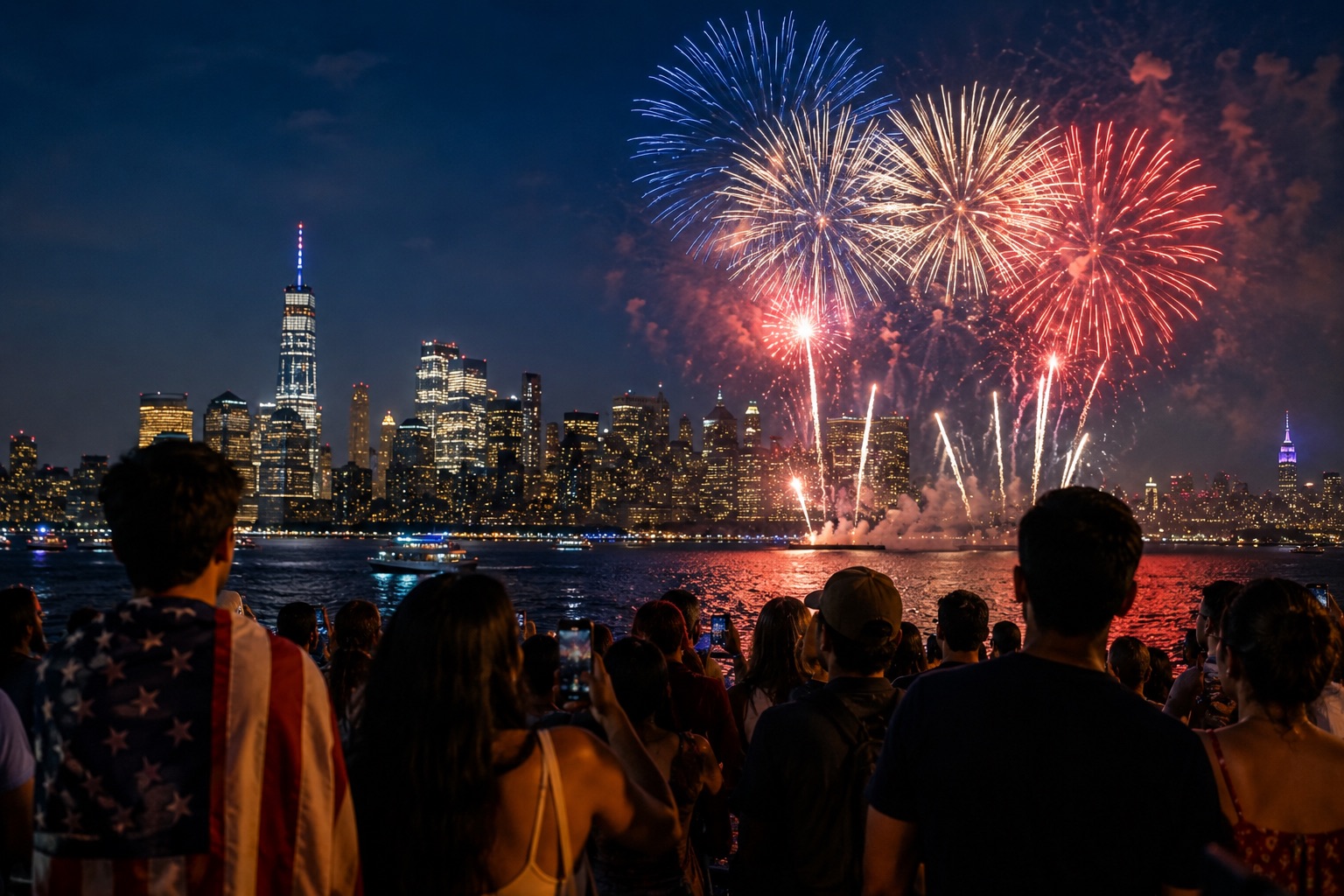
If you're like most New Yorkers you love watching fireworks on the Fourth of July — from Macy's spectacular bursts over the East River to the dazzling displays on Coney Island and throughout the state.
While some counties outside of New York City allow individuals to celebrate Independence Day with their own sparklers, nowhere in New York State are you allowed to set off airborne fireworks.
Most consumer fireworks are illegal across New York State. Aerial and explosive devices, like firecrackers, bottle rockets, Roman candles, and anything that flies or explodes, are banned everywhere in New York.
The only fireworks an adult can legally use are ground-based "sparkling devices" such as wooden-stick sparklers and fountains, and even those are legal only in counties that allow them. In New York City, everything is banned, including sparklers.
Take it from a personal injury attorney, with New York's strict firework laws created to support public and personal safety initiatives, if you live in New York, it may be best to leave to firework shows to the pros.
If you're planning to celebrate this Fourth of July with family and friends, understanding these New York firework laws will make sure your festivities go according to plan.
Are Fireworks Legal In New York?
No, not the kind most people picture. Under New York Penal Law § 270.00, consumer fireworks that are aerial or explosive are illegal to sell, use, or possess anywhere in the state. That includes sky rockets, bottle rockets, missile-type rockets, Roman candles, aerial shells and mortars, helicopters, spinners that leave the ground, firecrackers, and chasers.
New York carved out one narrow exception in 2014 for low-hazard "sparkling devices," but it left the final call to each county. So whether you can legally use even a sparkler depends entirely on where you are standing.
Which Fireworks Are Legal vs. Illegal in New York?
The dividing line is simple: if a device leaves the ground or produces a bang, it is illegal in New York. Legal "sparkling devices" stay on the ground, throw sparks, and do not explode. State law limits them to hand-held or base-mounted devices containing between 1 and 500 grams of pyrotechnic material.
One detail people miss: the law covers sparklers on wooden sticks. Metal-wire hand-held sparklers are legally classified as regular fireworks — and are therefore illegal.
Potentially legal (18+, in counties that allow them)
- Wooden-stick / dipped-stick sparklers
- Cylindrical and cone fountains
- Ground-based spinners that stay on the ground
- Party poppers and snappers
- Handheld or base-mounted devices, 1–500 grams
Illegal everywhere in New York
- Firecrackers and chasers
- Bottle rockets, sky rockets, missile rockets
- Roman candles
- Aerial shells and mortars
- Helicopters and airborne spinners
- Metal-wire sparklers
Are Fireworks Legal In New York City?
No. All consumer fireworks — including sparklers of every size — are illegal to use, buy, sell, or transport anywhere in New York City. The state's sparkling-device exception specifically does not apply to cities of one million or more people, and all five boroughs (the Bronx, Brooklyn, Manhattan, Queens, and Staten Island) separately prohibit them. Get caught, and you can face charges — and the NYPD may seize any vehicle used to carry the fireworks.
Where Are Sparkling Devices Legal In New York? (County Guide)
Sparkling devices are legal for adults in most New York counties, but a group of counties has opted out and banned them. According to New York's Office of Fire Prevention and Control, the following counties prohibit the sale and use of sparkling devices:
Every other New York county currently permits sparkling devices for people 18 and older. Among the counties closest to New York City, Rockland, Putnam, Dutchess, Sullivan, and Ulster allow them, and Orange County allows them everywhere except Middletown and Newburgh.
Because counties can change their local laws, confirm the current rule with your county or local fire authority before buying or using them.
Are fireworks legal on Long Island?
No. Both Nassau and Suffolk counties ban sparkling devices, and every other consumer firework is already illegal statewide — so there are no legal consumer fireworks anywhere on Long Island, sparklers included.
Are fireworks legal in upstate New York?
In much of upstate New York, adults 18 and older can buy and use sparkling devices, because most upstate counties have not banned them. The upstate exceptions are Albany, Columbia, Schenectady, and Warren. Airborne and exploding fireworks remain illegal upstate, just as they are everywhere else in the state.
How Old Do You Have to Be, And When Can You Buy Sparklers?
You must be at least 18 to buy or use sparkling devices in New York. Handing a sparkler to anyone under 18 (even for a moment) is against the law, and selling or furnishing fireworks to a minor is a crime.
Retailers can only sell sparkling devices during set windows each year:
- Permanent and specialty stores: June 1 to July 5, and December 26 to January 2.
- Temporary stands and tents: June 20 to July 5, and December 26 to January 2.
New York does not set a single statewide "curfew" time for sparkling devices, but towns and cities can enforce their own noise and nuisance rules, so local limits may apply.
What Happens If You're Caught With Illegal Fireworks In New York?
Penalties under Penal Law § 270.00 scale with the conduct:
- Possessing, using, or setting off illegal fireworks is a violation — punishable by up to 15 days in jail and/or a fine of up to $250.
- Selling or furnishing fireworks is a class B misdemeanor, and a class A misdemeanor if the fireworks are valued at $500 or more or are sold to someone under 18.
- A repeat conviction for selling dangerous fireworks to a minor within five years is a class E felony.
- Possessing $150 or more in fireworks creates a legal presumption that they were intended for sale.
The criminal penalty is only part of the picture. If illegally used fireworks injure someone, the person who set them off — and sometimes others — can also be held financially responsible in a civil claim.
How To Report Illegal Fireworks In New York
In New York City, call 911 to report an illegal fireworks sale in progress, someone storing large quantities of fireworks, or fireworks that pose an immediate threat to your safety. For non-emergencies, you can file a report through NYC311; officers from your local precinct respond when they are not handling emergencies, and police may seize vehicles used to transport fireworks. Outside New York City, contact your local police department or county sheriff.
Fireworks Injury? Who May Be Liable
Fireworks laws exist because these devices cause serious, preventable harm. According to the U.S. Consumer Product Safety Commission, thousands of people are treated in emergency rooms for fireworks injuries each year, with most occurring in the weeks around the Fourth of July.
Burns are the single most common injury, and the hands, fingers, head, and face are the body parts hurt most often. Sparklers alone send well over a thousand people to the ER annually — they burn at roughly 2,000°F, hot enough to melt some metals.
When a fireworks injury happens, more than one party may be responsible. Depending on how the injury occurred, a claim might involve the person who lit or supplied the fireworks, a property owner or party host who allowed them (a premises liability question), or a retailer or manufacturer if a device was defective or sold unlawfully.
New York's comparative-fault rules mean an injured person may still recover compensation even if they were partly at fault, and injury victims generally have three years from the date of the injury to file a personal injury lawsuit.
Frequently Asked Questions: NY Firework Laws
Common questions about New York's fireworks laws — what's legal, where, and what happens if the rules are broken.
Note: Fireworks laws and county rules may change over time; confirm current requirements with the appropriate government authority.